
The Science of the Crash: The Role of an Accident Reconstruction Expert Witness
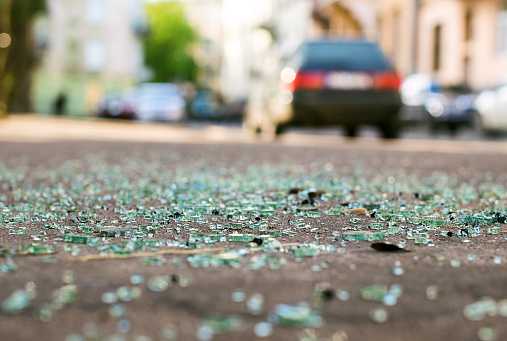
In the high-stakes environment of a courtroom, the details of a motor vehicle collision often become a matter of heated debate. Plaintiffs and defendants frequently offer conflicting accounts of speed, distance, and timing, leaving judges and juries to determine the truth from a collection of subjective memories and mangled metal. To bridge the gap between chaotic eyewitness accounts and the laws of physics, legal teams turn to accident reconstruction expert witnesses. These specialists are the forensic architects of the legal world, using a combination of engineering, physics, and mathematics to peel back the layers of a crash and provide a scientific explanation of how an accident truly unfolded.
The Foundation of Scientific Analysis
The work of an accident reconstruction expert witness begins long before they ever step into a courtroom. Their primary responsibility is to conduct an exhaustive investigation of the physical evidence left in the wake of a collision. This involves visiting the crash site to measure skid marks, examine gouge marks in the pavement, and document the final resting positions of the vehicles. They also conduct detailed inspections of the vehicles involved, looking at “crush patterns” and mechanical failures that might have contributed to the impact.
By applying the principles of Newtonian physics, such as the conservation of linear momentum and work-energy theorems, these experts can calculate critical variables that are otherwise impossible to verify. They can determine the exact speed of a vehicle at the moment of impact based on the length of skid marks and the friction coefficient of the road surface. This objective data serves as the foundation for their testimony, moving the conversation away from “he said, she said” and toward a quantifiable reality.
Translating Complex Data into Visual Evidence
One of the most vital roles an accident reconstruction expert plays is that of a translator. The math involved in reconstructing a high-speed collision is incredibly complex, involving differential equations and sophisticated computer modeling. To a jury of laypeople, these formulas can be overwhelming and confusing. The expert witness must take this dense technical data and present it in a way that is easy to understand without compromising the accuracy of the science.
To achieve this, experts often utilize advanced technology to create 3D animations and digital simulations. These visual aids allow the jury to see the accident from multiple angles, including the driver’s perspective or a bird’s-eye view. Seeing a simulation that accounts for the weight of the vehicles, the weather conditions, and the timing of traffic signals helps the jury visualize the expert’s findings. When a witness explains that a driver had two seconds to react but failed to brake, a well-timed animation can make that point far more effectively than a verbal description alone.
The Rigor of Cross-Examination
When an expert witness testifies in court, they must be prepared to defend their methodology under intense cross-examination. Opposing counsel will often attempt to discredit the expert’s findings by questioning the accuracy of their measurements or the software used to create their simulations. This is why a professional reconstruction expert must be meticulous in their documentation. They must show that their techniques are widely accepted within the scientific community and that they followed a logical, peer-reviewed process.
The expert’s demeanor and ability to remain calm under pressure are just as important as their technical knowledge. They must be able to explain why certain variables were included in their calculations and how a slight change in those variables might—or might not—affect the final conclusion. A successful expert witness is one who maintains their objectivity and remains focused on the science, even when faced with aggressive questioning.
Conclusion
The role of an accident reconstruction expert witness is a unique blend of high-level science and persuasive communication. By meticulously gathering physical evidence and applying the rigid laws of physics, they provide the court with a clear, objective picture of the moments leading up to a collision. Their ability to translate complex data into compelling visual evidence allows juries to make informed decisions based on reality rather than speculation.

